
Cervical Spinal Stenosis: Symptoms, Diagnosis, and Treatment
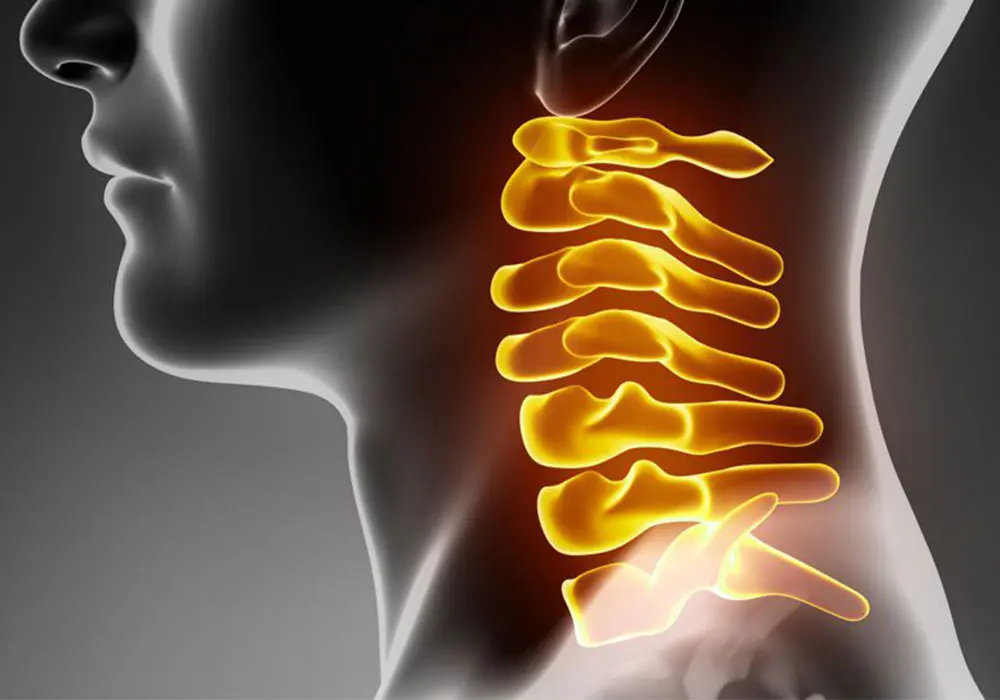
Cervical spinal stenosis (CSS) is a condition in which the spinal canal in the neck narrows, compressing the spinal cord (myelopathy) or the nerve roots (radiculopathy).
It is a predominantly degenerative disorder, caused by age-related changes such as osteophytes (bone spurs), ligament thickening, disc herniations, or, in some cases, a congenitally narrow spinal canal.
Symptoms may range from chronic neck pain and stiffness to tingling, numbness, or weakness in the upper limbs. In more advanced cases, spinal cord compression can cause balance difficulties, hand clumsiness (“myelopathic hand”) and, rarely, bladder or bowel dysfunction.
Among the main risk factors are aging, previous cervical trauma, genetic predisposition, repetitive neck strain (such as in weightlifting), and inflammatory diseases such as rheumatoid arthritis.
Diagnosis
Diagnosis begins with a thorough neurological evaluation, including:
- Esame dei Testing of reflexes and muscle strength
- Assessment of balance and gait
- Evaluation of fine motor skills of the hands
MRI (Magnetic Resonance Imaging) is the gold standard examination to visualize spinal cord compression and soft tissue changes.
In specific cases, CT scan or dynamic X-rays (flexion/extension views) help assess bony morphology and possible spinal instability.
Electromyography (EMG) may be useful in distinguishing cervical stenosis from other peripheral nerve disorders.
Conservative Treatment
Initial treatment is usually non-surgical and aims to reduce symptoms and slow disease progression.
Options include:
- Targeted physical therapy to improve posture and strengthen the cervical muscles
- Anti-inflammatory medications and analgesics to relieve pain and stiffness
- Soft cervical collar, to be used for short periods
- Epidural corticosteroid injections, useful in cases of acute radicular pain
Approximately 50–70% of patients achieve stabilization or improvement of symptoms with a conservative approach.
Surgical Treatment
La chirurgia è indicata nei casi di:
- Progressive myelopathy (worsening motor function or balance)
- Severe radiculopathy with persistent neurological deficits
- Riduzione significativa della qualità di vita
The main goals are to decompress the spinal cord and nerves while preserving cervical stability.
The most commonly used techniques include:
- Laminectomy or laminoplasty (posterior approach) to enlarge the spinal canal
- Anterior cervical discectomy and fusion (ACDF) to remove anterior compression
- Endoscopic foraminotomy in selected cases, using a minimally invasive approach with faster recovery
Studies show that 70–85% of patients experience neurological improvement and pain reduction after surgery.
However, fusion procedures may, over time, lead to increased stress on adjacent vertebral segments, with a risk of secondary degeneration.
Rehabilitation and Recovery
The post-operative pathway includes:
- Personalized physical therapy to restore mobility and strength
- Postural re-education exercises
- Low-impact physical activities (walking, swimming, stretching)
- Ergonomic correction of the workstation
- Adoption of a healthy lifestyle (maintaining a healthy weight, smoking cessation)
A gradual and guided rehabilitation program is essential to maintain long-term results and prevent recurrence.
Conclusions
Cervical spinal stenosis is a complex condition but can be successfully treated with timely diagnosis and a multidisciplinary approach.
An early evaluation by a spine specialist makes it possible to identify the most appropriate therapeutic strategy — conservative or surgical — by balancing the need for decompression, vertebral stability, and the patient’s quality of life.
The goal is to preserve spinal cord function, reduce pain, and improve safety in daily movements.