
Regenerative medicine applied to the spine represents one of the most significant innovations in the treatment of spinal disorders today. The goal is not only to surgically intervene on a compromised spine, but also to prevent the progression of spondylodiscarthrotic degeneration and, when possible, to regenerate damaged tissues. This approach goes beyond the traditional logic of surgery, integrating the latest scientific evidence with the clinical experience gained from treating numerous patients.
Through these techniques, it is possible to reduce inflammation, quickly relieve pain, and stimulate the regeneration of the intervertebral disc and vertebral fibrocartilaginous structures, promoting a more complete functional recovery.
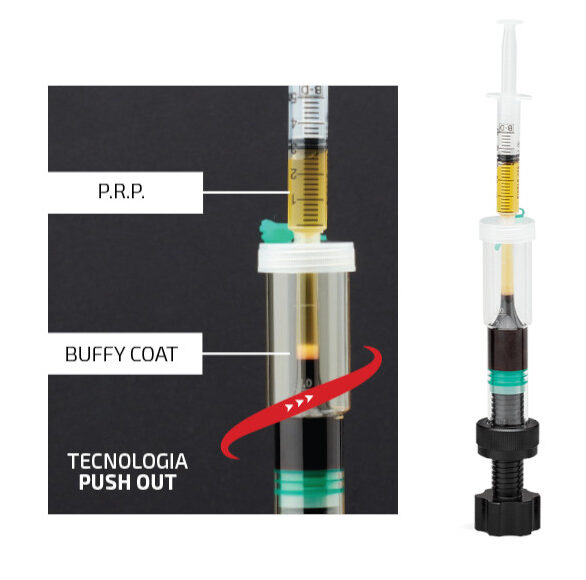
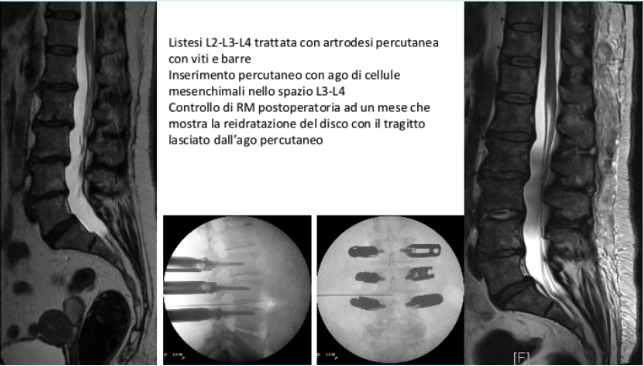
The treatments we use are based on the use of mesenchymal stem cells, harvested from the patient’s adipose tissue, and platelet-derived growth factors such as PRP, obtained from a simple blood draw, both of which have proven effectiveness in promoting the body’s natural healing processes.
Applications can complement spinal surgery by improving the quality of healing and reducing the risk of recurrence, or they can be used as an alternative through minimally invasive image-guided percutaneous procedures. In selected patients, the latter allow for a quick return to mobility and reduced recovery times, representing a valid option to slow down degenerative progression.
The challenge of regenerative medicine for the spine is therefore not only to correct an existing damage but also to preserve and regenerate tissues, offering the patient a personalized, safe, and innovative approach that expands the horizons of spinal surgery and concretely improves quality of life.